 Русский


What are the differences between mounted and unmounted spherical roller bearings?
I. Structural Differences
1. Unmounted: Only the bearing body is present.
○ It's a single spherical roller bearing.
○ You need to purchase the bearing housing, end cap, and seal separately.
○ It can be installed separately in the user's own housing or bracket.
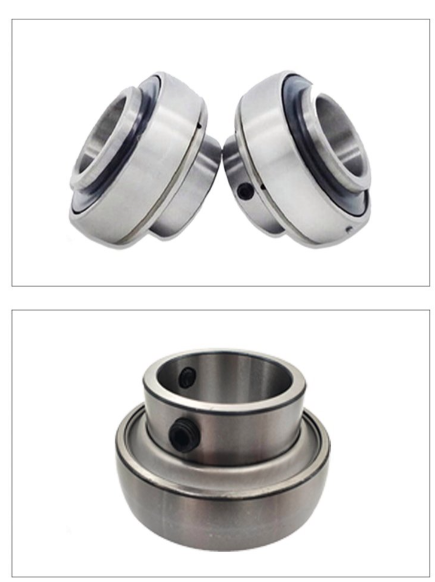
2. Mounted: Bearing + housing integrated (bearing housing unit)
○ The bearing is pre-installed in a cast iron/stamped steel housing.
○ The housing comes with mounting holes, grease fittings, and seals.
○ It can be directly bolted on after purchase.
II. Performance Differences
Item | Unmounted | Mounted |
Installation | Complex, requires machining housing holes | Simple, bolted on |
Alignment | Depends on installation accuracy | Self-aligning |
Sealing | Requires additional parts | Integrated sealing is better |
Rigidity | Depends on the housing | Cast iron housing has high rigidity |
Cost | Bearing is cheaper, but machining is expensive | Overall, cheaper and easier |
III. Application Scenarios (Most Crucial)
1. Unmounted — 1. For use in internal equipment and precision mechanisms:
○ Gearboxes, reducers, pump bodies, machine tool accessories
○ Internally integrated by the equipment manufacturer; the outer casing is part of the complete machine
○< face="宋体"> Small space, compact structure, requiring precise fit
2. With mounting bracket – For drive shafts, outdoor/simple frames
○ Agricultural machinery: harvesters, tractors, seeders
○ Conveying equipment: belt conveyors, rollers, assembly lines
○ Fans, mixers, textile machinery, woodworking machinery
○< face="宋体"> Features: Shafts are prone to deformation, installation misalignment, harsh environments; the outer spherical surface of the mounting bracket relies on self-aligning to compensate for misalignment; dust-resistant and vibration-resistant.
Do you have
any question? Call


 Добавить:Промышленный парк прецизионных подшипников в округе Гуантао, провинция Хэбэй.
 Тел:China: +86-635-8550888 Korea Branch: 032-213-8882 Fax:032-213-8883
 Электронная почта:China: bearing@jito.cc
  Веб-сайт:www.jito-bearing.com


